


Drive down Louisiana Highway 1 on any given morning and you’ll see it: pickups and work trucks rolling south before the sun comes up, heading toward Port Fourchon. These are the logistic providers, the welders, divers, crane operators, and deckhands whose families have worked the Gulf for generations, and for the first time in a while, the path to keep that going for the next generation looks like it’s actually open.
Port Fourchon sits at the end of that road. We service roughly 100% of deepwater Gulf exploration and production assets. The most sophisticated equipment and machinery in the world travels through our Port, to be loaded onto vessels and transported out to any number of offshore projects and locations. So too does the ordinary equipment and supplies that are required on a daily basis to support Gulf of American energy activity. We are fortunate to be strategically located directly on the Gulf, we are fortunate to have had sixty six years of Port leadership to create and achieve our goals of being the leading offshore service port on the Gulf. Sixty six years of meeting needs and showing up.
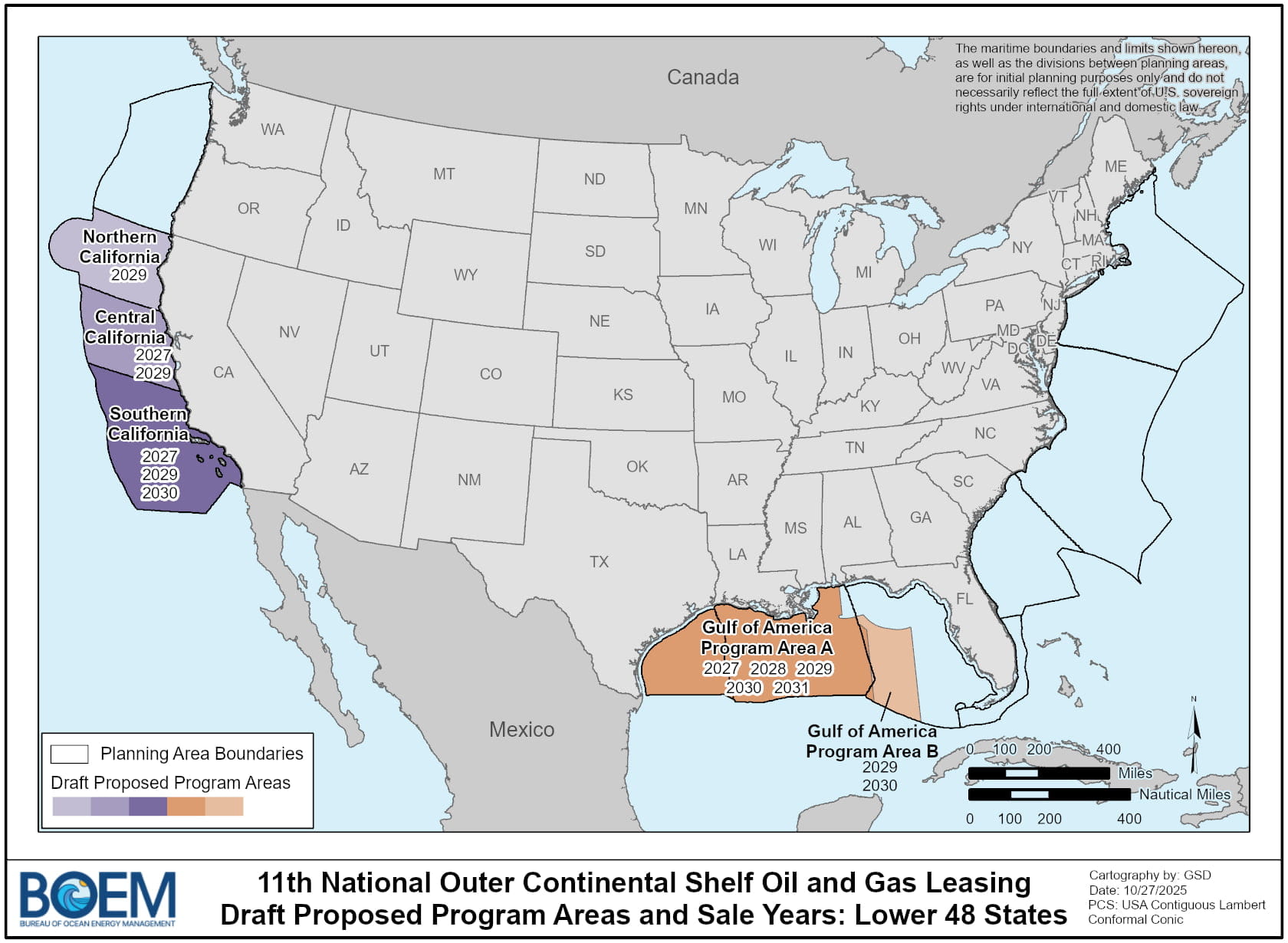
A new report from API and NOIA, prepared by Energy and Industrial Partners (EIAP), makes the economic case for opening Program Area B in the South-Central Gulf of America to responsible offshore leasing, and the numbers are worth taking note: more than 133,000 jobs supported by 2040, over $11 billion in GDP, nearly half a million barrels of oil equivalent per day from expanded production, and government revenues approaching $1.5 billion.
For South Louisiana and across the Gulf region, that kind of activity runs through every level of daily life: local government budgets, school funding, local businesses, community charitable organizations, churches, all that depend on the spending power of an offshore workforce with good wages.
The timing of this conversation isn’t coincidental. Data from Rystad Energy and BOEM, consistent with what the EIAP study projects, points to a decline in Gulf production beginning around 2030 if new acreage isn’t brought online. That date looms large on the horizon, because this is an industry where exploration, permitting, and development run on multi-year timelines. 2030 is already close.
The window to act is now, and to their credit, the current Administration appears to understand that. The five-year federal offshore leasing program being advanced reflects a serious engagement with what it actually takes to sustain domestic production, and it’s the kind of policy framework this industry needs to plan around, to plan ahead.
What the EIAP report also gets right is something we’ve known here for years: the Gulf isn’t starting from scratch. The infrastructure is already here. The workforce is already here. The job training is already here. The engineering expertise, the deepwater safety protocols, the supply chain relationships that took decades to build, all of it is sitting in South Louisiana and other regions around the Gulf, and around the Country. What we need is access to new acreage to keep the engine running.
People outside this region don’t always understand that offshore basins require constant replenishment. You can’t sustain production on legacy leases while those existing fields naturally deplete. The South Central Gulf expansion is a logical extension of where we already operate–in adjacent waters, distant from the coastline, and building on a proven supply chain ecosystem, rather than constructing one from scratch.
The geopolitical reality is dominant in everything we as an industry do. Global demand isn’t letting up, and if American consumers and American industry are going to have energy at reasonable prices, that supply must come from somewhere. I’d rather it come from wells operated under the most stringent safety and environmental standards in the world, which is what Gulf of America production delivers, than from regions with far less regulatory oversight. The Gulf of America is among the lowest carbon-intensity sources of oil on the planet, a fact that rarely gets the attention it deserves in these conversations.
When federal officials debate offshore leasing policy, I’d ask them to think about the person running cable on a platform a hundred miles offshore in January, doing skilled and demanding work that keeps the lights on and cars fueled for the rest of the country. Those workers have shown up through hurricanes, market crashes, and a global pandemic, and they deserve a future in this industry that matches the commitment they’ve brought to it. And so do the next generation of workers who are beginning grade school right now, and the generations after that.
Port Fourchon is the connective tissue between onshore Louisiana and deepwater production: people, equipment, supplies, emergency response, it all moves through here.
Louisiana built this industry, trained for it, and rebuilt after every setback. The Gulf of America is a national asset, and the people who actually run it are from right here. They’re ready for what comes next. American Offshore Energy and Port Fourchon are Ready today. Ready for tomorrow.